
How Do I Solve My Rat Problem?
Rats, mice and squirrels are all common rodents that live in close proximity to and are around us in nature when we see them, and most of the time when we don’t. We get our word rodent from the Latin word “rodentia” which is derived from the word rodere which means “to gnaw”. If you know you have rodents in your home this name makes a lot of sense. Rodents are distinguished by a single pair of incisor teeth in both their upper and lower jaw that continuously grow and need to be worn down by gnawing. If they are unable to gnaw to grind their teeth down, their teeth will grow into their skull and kill them. All this to say rodents will chew and a gnawing sounds along with a dead smell will be indicators that you likely have a rodents issue. You will hear what sounds like a constant scraping or grinding on wood, and the occasional skitter as they move around in your attic or crawl space. Check the space that your hear noises, attic or crawl space and look for droppings; larger than a grain of rice means its likely rats, smaller than a grain of rice and it is probably mice. I’m going to be a little gross for the sake of education but believe me, it is necessary for proper diagnosis. If the droppings you find are wet and squishy they are almost certainly fresh, if they are sitting in a puddle of water this can change things but rat droppings dry out in about a week, with mice droppings drying in a couple of days. Fresh droppings + hearing noises in your space = an active rodent issue in your home.
Methods of elimination
So I have determined that I have rodents in my space, what can I do and what should I do? First and the easiest is to leave the problem and hope it goes away on its own. This option may appear to work but most of my customers have had a problem for quite a while and the issue has remained hidden for months, sometimes years. You can be unaware of a rodents issue for sometime but they are still living in your space, urinating, defecating and chewing on water lines, electrical and plumbing. Discovering rodents is like discovering cancer, you want to catch it early and do something quick before the issue gets worse. The next easiest method is setting poison in bait boxes. A quick note about bait stations; bait stations are both required by law (the label is the law and the label states “ Bait stations are mandatory for outdoor, above ground use. Tamper-resistant bait stations must be used wherever children, pets, non-target mammals, or birds may have access to the bait placement location”) and are a wise way to apply poison baits. However, bait boxes are not perfect and rodents can chew the block off the peg and take the block to where they nest, possibly getting spooked and dropping it on the way. However, the biggest downside of poison is if the entry locations into your crawl or attic space have not been sealed off rodents will eat the bait and will die in a wall or under your sub-floor and cause flies and a horrible odor for weeks. These are not your best long-term solutions.
Effective Exclusion Methods
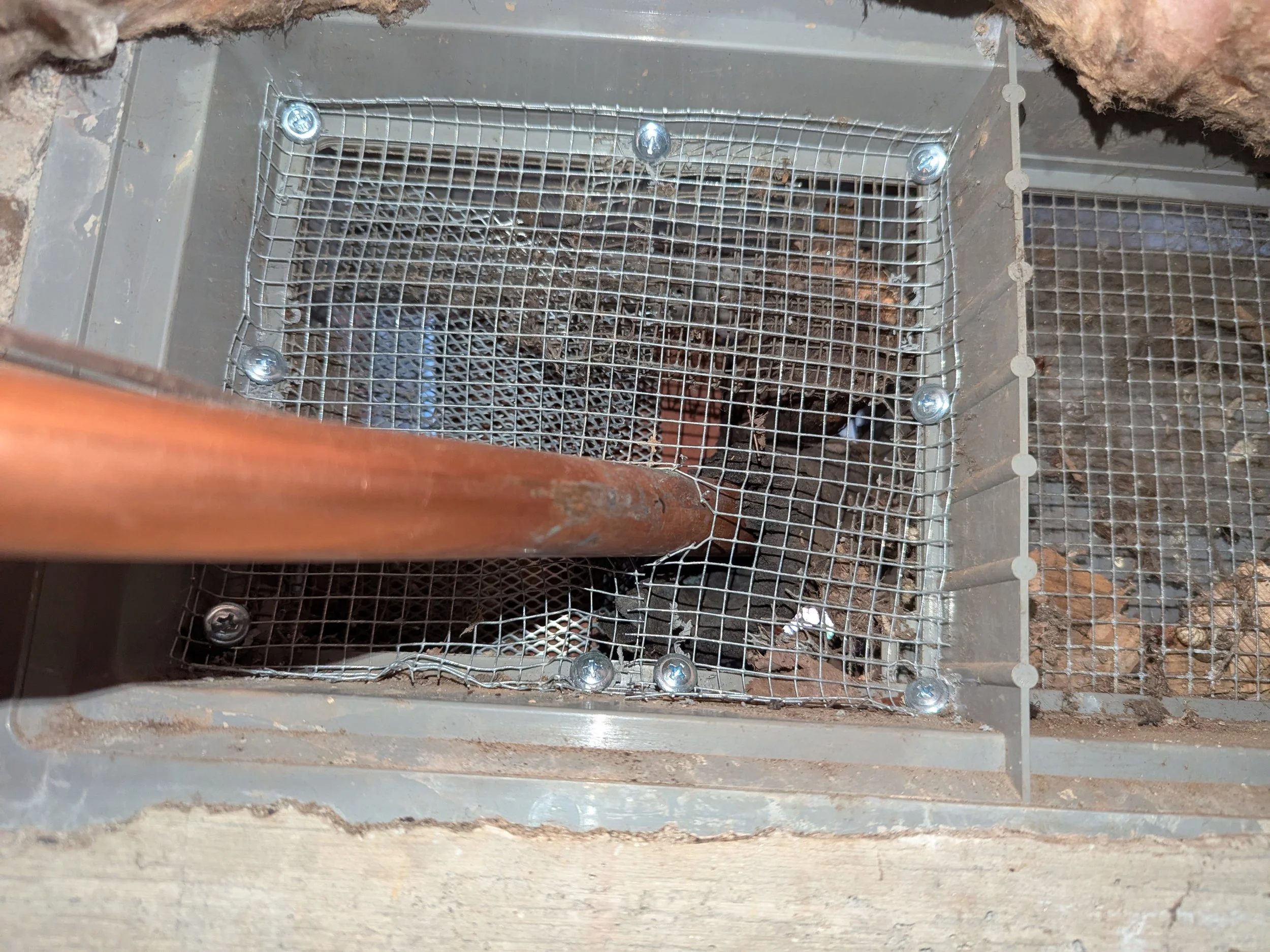
Finally we get to the most effective solution to your attic or crawl space rodent problem. A thorough inspection followed by effective exclusion (sealing) methods. Rodents are getting into your crawl or attic space through entry points and those entry points can be sealed off, and if done properly is the most effective and long term solution to your problem. This is the most difficult of the 3 options because properly sealing these entry points requires access to these locations and rodents often don’t choose the most accessible spots. Check foundation vent screens(shown above and below), under your exterior siding, or gaps in your foundation , any holes I can put a finger through is generally large enough for a small mouse to enter and large enough for a rat to chew its way through. The best location to seal foundation vent entry points is from the interior of the crawl space, this will look the best as well as keep any foundation vent screen covers operable. Metal screen of some type anchored to the vent screen or concrete is the only long term solution to sealing these entry points. Steel wool can be pulled out by larger rats and rusts, foam can easily be chewed through and caulking, even “chew proof“ caulking, will eventually come loose through thermal expansion. After these entry points have been properly sealed off you need to set traps within the attic or crawl space to eliminate any rodents that may be trapped within the space. This is very important as you don’t want rats trying to chew their way out or dying within the space. Entry points must be sealed off first before trapping because rats may not interact with these traps if they have access to their primary food source outside. Check the space for new droppings and continue to check the traps every 3-5 days for 1-2 weeks. You should stop catching rodents and seeing fresh droppings by this time. If you continue to catch rodents, you may have missed an entry point, do another thorough inspection with a flashlight and gloves.
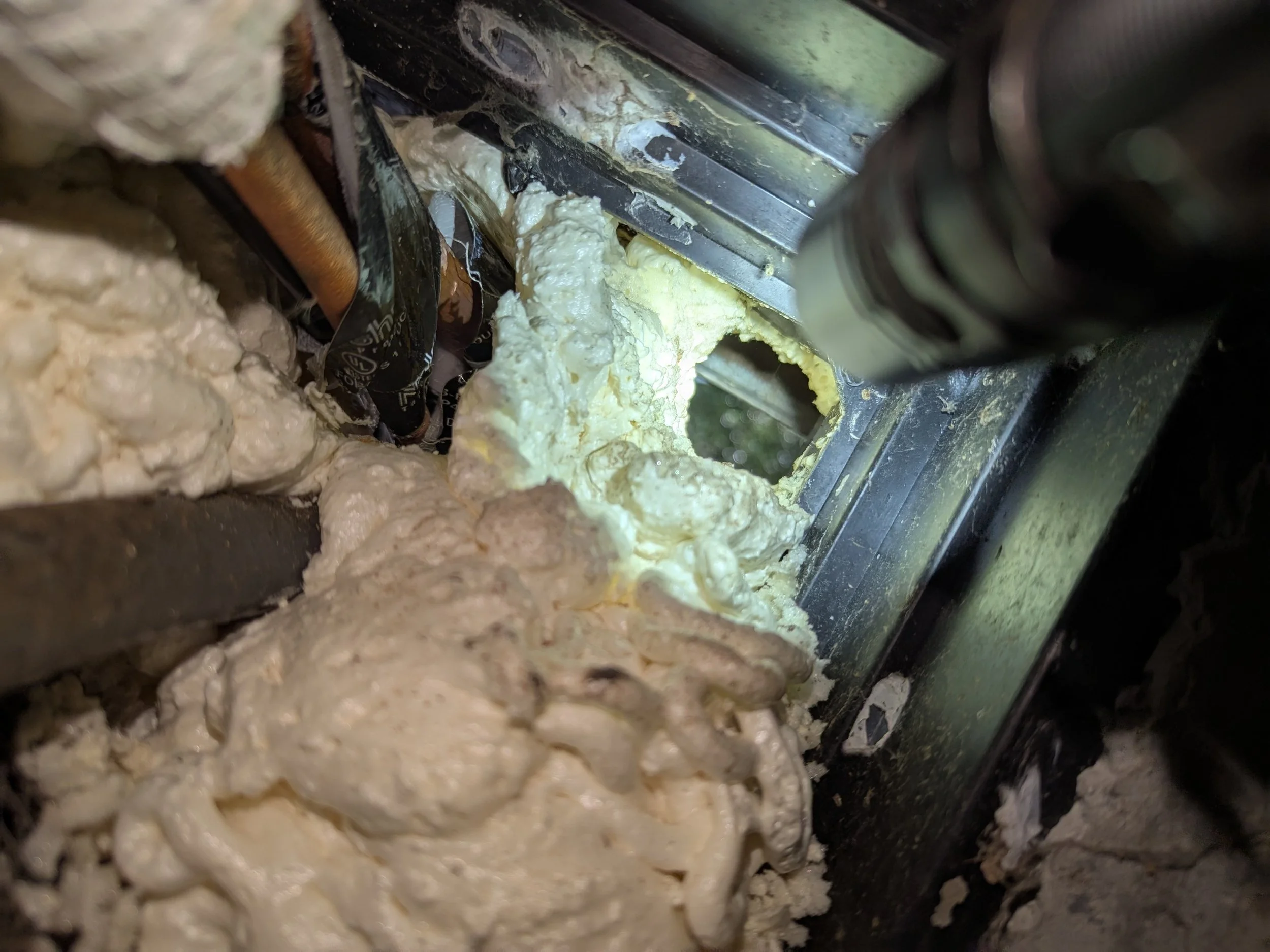
Foundation vent screen sealed with foam that was chewed through by rats
Conclusion
This is quite a large topic and many homes are built different bringing different entry point challenges but proper exclusion is the right tool for the job when it comes to residential homes. With proper execution this will give you long term solutions that will leave you and your family happy with the results.
